 Showroom


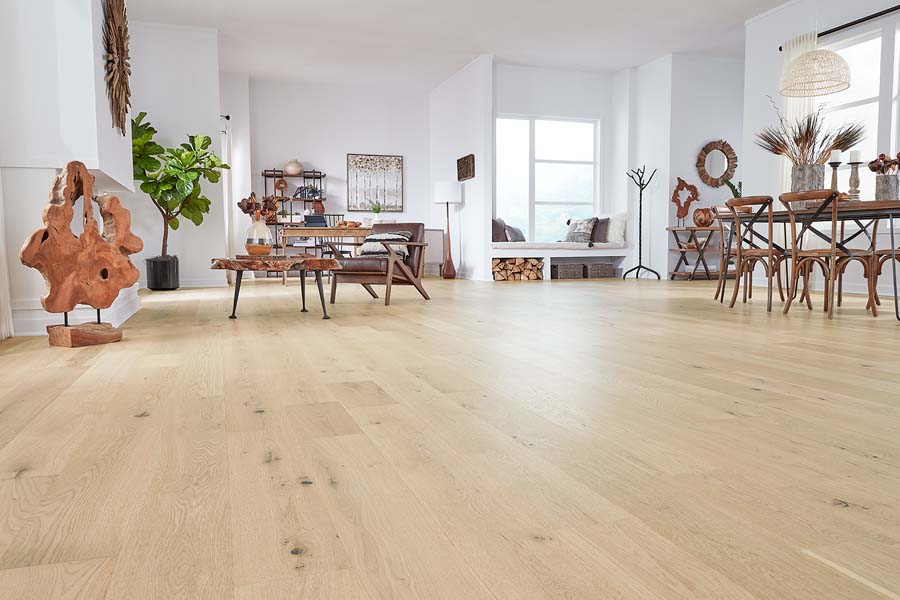
Hardwood flooring brings warmth, character, and lasting beauty to any home. But should you choose solid or engineered hardwood flooring? Both offer the natural beauty of real wood, yet they differ in construction, durability, installation, and maintenance.
At Carpet USA & Tile, we've spent more than 40 years helping people find quality flooring. Let's compare solid and engineered wood flooring to help you make the right choice.
What is the difference between solid and engineered hardwood flooring?
The biggest difference is construction.
Solid hardwood flooring is made from a single piece of natural wood, typically 3/4 inch thick. Popular species include oak, maple, hickory, and walnut. Its construction allows many floors to be sanded and refinished multiple times.
Engineered hardwood flooring features a genuine hardwood surface bonded to layers of plywood or another stable core. This construction reduces expansion and contraction caused by temperature and humidity changes.
Both provide authentic wood grain, natural color variations, and timeless appeal.
What are the benefits of solid hardwood flooring?
Solid hardwood remains popular for its traditional craftsmanship and long-term value.
Key advantages include:
Long lifespan: Properly maintained solid hardwood floors can last for generations.
Refinishing potential: Many solid hardwood floors can be sanded and refinished multiple times.
Natural beauty: Every plank features unique grain patterns and character.
Timeless appeal: Solid wood flooring complements traditional and modern interiors.
Design flexibility: Refinishing allows you to change your floor's stain color.
Solid hardwood works well in living rooms, bedrooms, dining rooms, and other above-grade spaces.
However, it naturally expands and contracts with moisture changes. Proper acclimation, installation, and humidity control are essential.
What are the benefits of engineered hardwood flooring?
Engineered wood flooring combines natural wood beauty with greater dimensional stability.
Its advantages include:
Improved stability: Layered construction minimizes movement caused by humidity changes.
Flexible installation: Certain products can be installed over concrete subfloors.
Versatile styles: Choose from various wood species, colors, textures, and plank widths.
Authentic appearance: The hardwood surface delivers genuine wood grain and character.
Installation options: Depending on the product, engineered hardwood may be glued, nailed, stapled, or floated.
Engineered wood flooring is especially practical for homes with concrete foundations, common throughout Southern California.
However, engineered hardwood flooring isn't waterproof. Its refinishing potential also depends on the thickness of its hardwood surface.
Is solid or engineered hardwood more durable?
Both solid and engineered hardwood flooring can withstand everyday use when properly maintained.
Solid hardwood offers greater long-term refinishing potential. Scratches, worn finishes, and surface damage can often be corrected through sanding.
Engineered hardwood provides better dimensional stability, reducing certain moisture-related problems. However, its surface can still scratch or dent.
Wood species, finish quality, and household activity also affect durability. For homes with children or pets, consider harder wood species and durable factory-applied finishes.
Is solid or engineered hardwood better for concrete subfloors?
Engineered wood flooring is often the better choice for concrete subfloors.
Many engineered products are approved for installation over properly prepared concrete. Their layered construction helps accommodate environmental changes.
Solid hardwood generally requires a suitable wood subfloor or approved installation system. Direct installation over concrete is typically not recommended.
Before installation, professionals should evaluate subfloor moisture, flatness, and manufacturer requirements.
Is solid or engineered hardwood flooring more expensive?
Pricing depends on wood species, plank dimensions, finish, construction, and installation requirements.
Solid wood flooring may have higher installation costs due to subfloor preparation and fastening requirements. However, its refinishing potential offers long-term value.
Engineered wood flooring comes in various price ranges. Some products offer economical installation, while premium options can cost as much as solid hardwood.
Compare total project costs, including materials, installation, and future maintenance.
Frequently asked questions about solid vs. engineered wood flooring
Can engineered hardwood flooring be refinished?
Some engineered hardwood floors can be refinished, depending on the thickness of their hardwood surface. Thin veneers may not support sanding.
Is solid or engineered hardwood better for pet owners?
Both can work well with pets. Choose harder wood species and durable finishes, keep nails trimmed, and clean spills promptly.
Does engineered hardwood last as long as solid hardwood?
Solid hardwood generally offers greater refinishing potential and longevity. Quality engineered hardwood can also last decades with proper care.
Which hardwood flooring is best for California homes?
Engineered hardwood flooring is often practical for homes with concrete subfloors or changing humidity. Solid hardwood flooring works well in suitable above-grade spaces.
Visit us for premium solid and engineered hardwood flooring in Simi Valley, CA
Choosing between solid and engineered hardwood flooring depends on your subfloor, budget, lifestyle, and long-term goals. Neither is universally better.
At Carpet USA & Tile, we're a family-owned wood flooring store with over 40 years of experience. We offer quality hardwood flooring from leading brands, professional residential and commercial installation, and personalized service. Our wood flooring store in Simi Valley, CA, serves Simi Valley, CA, Moorpark, CA, Camarillo, CA, Calabasas, CA, and Ventura County, CA. Get in touch with us today!


